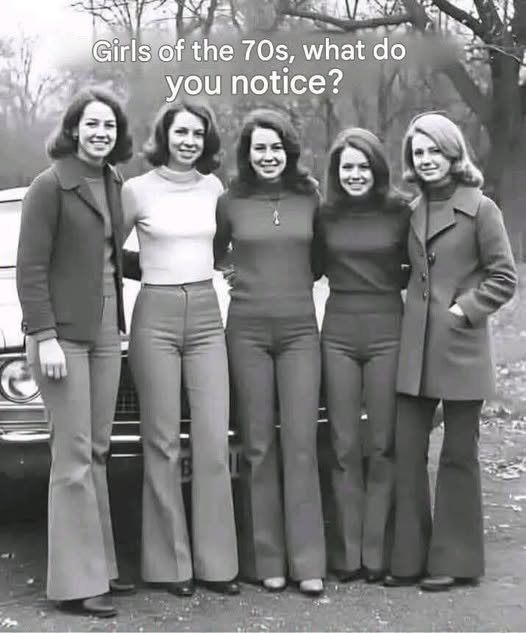
A vintage photograph of girls in the 1970s invites viewers to notice details that once felt ordinary. Bell-bottom trousers, patterned fabrics, natural hairstyles, platform shoes, and the warm grain of film can identify the decade before anyone knows the names of the people pictured. The image feels nostalgic because it captures style and social life before digital cameras made photographs constant.
Fashion in the 1970s did not follow one uniform look. Early years carried elements of the late 1960s, including flowing fabrics, folk influences, fringe, and handmade details. Disco later brought shine, dramatic silhouettes, and clothes designed for movement. Denim became central to everyday style, while bold prints and wide collars appeared across age groups.
Hair also communicated identity. Long center-parted styles, feathered cuts, afros, braids, and natural texture all appeared during the decade. Beauty standards remained powerful, but social movements encouraged many women to reject narrow expectations and present themselves in ways connected with cultural pride or personal freedom.
The photograph’s colors may look softer than life because film stocks, development, storage, and age alter an image. Prints fade, whites shift toward yellow, and shadows lose detail. Modern filters imitate that effect because viewers associate it with authenticity. The original photographer, however, was working within the limits of a physical camera and a finite roll of film.
Taking a photograph required more intention. There was no instant preview and no effortless stream of retakes. Families waited for film to be developed, sometimes discovering weeks later that someone blinked or the framing was imperfect. Those limitations made individual prints important objects passed through albums and boxes.
Social life was also less documented. Friends could attend school, dances, concerts, or neighborhood gatherings without creating a searchable record of every outfit and conversation. That did not mean life was private or free from judgment. Gossip, family expectations, school rules, and local communities exerted their own pressure. The difference was scale and permanence.
The decade brought major changes for women. More women entered higher education and paid work, while movements fought discrimination and demanded reproductive, legal, and economic rights. Progress was uneven and often resisted. A cheerful group photograph cannot show the limits, conflicts, or opportunities each girl faced.
Music shaped clothing and identity. Soul, funk, rock, punk, disco, and singer-songwriter traditions offered different communities and styles. Radio, records, television, and live venues helped trends spread without today’s algorithmic speed. Young people still borrowed looks from celebrities, but adaptation happened through local shops, sewing, hand-me-downs, and imagination.
Nostalgia can make an earlier decade appear simpler and kinder than it was. The 1970s included economic instability, political conflict, racism, sexism, and limited opportunities for many people. Appreciating the photograph should not require erasing those realities. The girls shown may remember the era with affection, pain, or both.
The first detail a viewer notices may be the clothes, hair, posture, or absence of phones. The deeper value lies in seeing real people at one moment before their futures unfolded. A vintage image is not merely an aesthetic template. It is a fragment of lives shaped by a particular time, preserved on film and interpreted decades later by viewers who bring their own memories to it.
If the photograph comes from a family collection, names, dates, and memories should be recorded while people can still provide them. A short note on the back or a digital catalog can preserve context that would otherwise disappear. Scanning the print at good quality protects access while the original is stored away from heat, moisture, and direct light. Preservation turns nostalgia into history by keeping the people and place connected with the image.