
I took the invitation and the hotel email with me on my trip.
Not because I expected to need either one.
I brought them because, for months, those two pieces of paper had represented opposite versions of the same evening.
The invitation said I was a host.
The email said I was not.
The invitation existed because someone wanted other people to believe I had agreed.
The email existed because I had felt uneasy enough to protect the truth before I knew exactly how it would be challenged.
I slipped both pages into a folder at the bottom of my suitcase.
Then I left town.
For the first two days, I checked my phone too often.
I told myself I was only making sure nothing urgent had happened.
In truth, I was still trained to expect someone else’s crisis.
Julian might call.
Kendra might write.
A relative might need an explanation.
Someone might ask for money.
Someone might need me to settle something.
On the third morning, I turned my phone off for four hours.
Nothing collapsed.
That became a private joke with myself.
The world survived four hours without Evelyn Parker.
The next day, it survived six.
I walked through a museum slowly.
I ate lunch alone without pretending to read messages.
I sat in a hotel lobby and watched strangers come and go.
No one knew me as Julian’s mother.
No one knew me as Kendra’s mother-in-law.
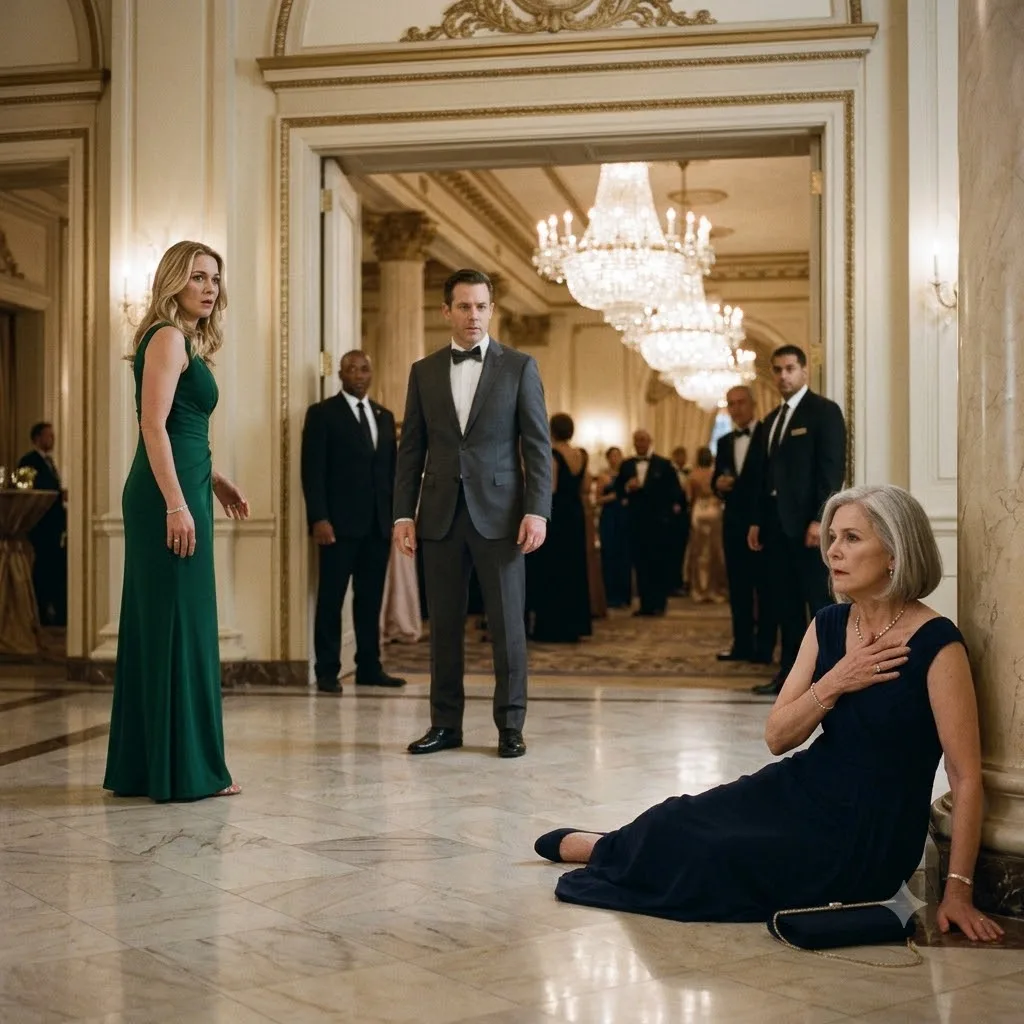
No one knew what had happened in a marble foyer.
I was simply an older woman traveling by herself.
That anonymity felt like fresh air.
I had not realized how much of my identity had become relational.
Mother.
Mother-in-law.
Widow.
Aunt.
Reliable friend.
The person who remembers birthdays.
The person who brings extra food.
The person who pays when things get awkward.
I did not dislike those roles.
But I had forgotten there was a self underneath them.
One afternoon, I sat outside with coffee and wrote a list.
Not of grievances.
Of things I wanted.
That was harder than I expected.
I wanted to travel twice a year if my health allowed it.
I wanted to replace the old chair in my reading room because the cushion had been uncomfortable for three years.
I wanted to take a ceramics class.
I wanted to stop hosting every major family holiday.
I wanted to decide which gifts I gave without being told what would be “helpful.”
I wanted people to ask before assuming.
I wanted Julian to visit because he wanted to see me, not because he needed a solution.
I wanted a relationship with him that could survive the word no.
I stared at the last sentence.
That was the heart of everything.
A relationship that can survive no.
How many relationships had I maintained by avoiding that test?
I closed the notebook.
When I returned home a week later, the first thing I noticed was how quiet the house felt.
Not lonely.
Quiet.
There is a difference.
Loneliness asks to be filled.
Quiet gives you room.
I unpacked.
The invitation and email went back into my desk.
Then I did something symbolic and slightly ridiculous.
I replaced the old reading chair.
The new one cost more than I normally would have spent.
I paid cash from my checking account.
No one applauded.
No one thanked me.
No one called it an investment.
I loved it.
Julian came by the following weekend.
He stood in the doorway of the reading room.
“New chair?”
“Yes.”
He sat in it before I could stop him.
“Comfortable.”
“Get out.”
He laughed.
“You bought yourself something expensive.”
“Do not make it a historic event.”
“It kind of is.”
I tried not to smile.
He stood.
“How was the trip?”
“Good.”
“Did you miss me?”
“Occasionally.”
He put a hand over his heart.
“Cruel.”
We went into the kitchen.
He had brought sandwiches.
Not because I could not feed us.
Because he had learned that visiting someone did not require them to work.
We ate at the table.
After a while, he told me he and Kendra were still living separately.
I nodded.
He watched my face.
“You don’t have to pretend you don’t have an opinion.”
“I have many opinions.”
“I know.”
“They are still not instructions.”
He smiled faintly.
“That’s probably healthy.”
“Do not sound surprised.”
He grew serious.
“Kendra is doing better.”
“I’m glad.”
“She’s working.
Smaller projects.”
“That sounds sensible.”
“She sold some things to deal with the gala expenses.”
I held up a hand.
“I do not need the financial details.”
He stopped.
“Right.”
“I mean it, Julian.
I do not want to become emotionally responsible for whether the consequences are difficult enough or too difficult.”
He nodded.
“That makes sense.”
We ate in silence for a moment.
Then he said, “She still wants to apologize in person someday.”
“I know.”
“Do you think you’ll ever say yes?”
I considered it.
“Maybe.”
His eyes lifted.
“Not now.”
“Okay.”
“I need to know that if I meet her, I can leave the moment the conversation turns into a request for absolution.”
“You can.”
“And I need you not to be there.”
That surprised him.
“Why?”
“Because you have spent too much time translating between us.”
He looked down.
“That’s true.”
“If she apologizes, I need to hear her words without watching your face.”
He nodded slowly.
“I understand.”
I believed him.
Spring became summer.
My wrist stopped hurting except on damp mornings.
The case from the hotel moved toward resolution in ways that required less and less of me.
I continued to tell the truth when asked.
I did not follow Kendra’s professional life.
I did not search her business online.
I did not ask Julian whether clients had returned.
That took discipline.
Curiosity can be another form of attachment.
If I constantly checked whether she was suffering enough, I would still be organizing my life around her.
I did not want revenge.
I wanted freedom.
There is a difference.
Revenge keeps the other person at the center.
Freedom removes them.
One evening in June, I received a call from Dana, the woman who had apologized for applauding.
We had exchanged two notes but never spoken.
She asked if I would meet her for coffee.
I almost said no.
Then I remembered something Marjorie had told me.
Not every connection that comes from a painful event has to remain painful.
I agreed.
Dana was in her fifties, warm, direct, and more nervous than I expected.
“I hope this isn’t intrusive.”
“It might be.
We’ll find out.”
She laughed.
“I deserved that.”
We ordered coffee.
She told me she had attended the gala because she was considering hiring Kendra for a staging project.
I did not ask whether she had.
Dana volunteered the answer.
“I didn’t.”
I looked at her.
“Because of what happened?”
“Partly.”
I felt a flicker of guilt.
She saw it.
“Please don’t do that.”
“Do what?”
“Take responsibility for a business decision I made after watching someone lie publicly and then create a scene when corrected.”
I said nothing.
Dana continued.
“I’m telling you because I think you should understand something.
You did not ruin her reputation by speaking.
The room changed because people realized what had happened.”
I looked down at my cup.
“That distinction has been difficult for me.”
“I could tell.”
“How?”
“You apologized to me in your note for putting me in an awkward position.”
I blinked.
I had forgotten.
Dana smiled.
“You were the person who was lied about, and you still apologized because I felt awkward.”
I laughed softly.
“That sounds like me.”
“It does.”
We talked for nearly an hour.
Not about Kendra.
About aging.
Work.
Adult children.
Money.
Dana told me her own mother had spent retirement savings rescuing relatives until she had almost nothing left for herself.
“She thought saying no made her selfish.”
“That sounds familiar.”
“It usually does.”
When we parted, Dana hugged me.
I drove home thinking about the strange way one public lie had exposed private beliefs I had carried for years.
Money was only one part.
The deeper belief was that my value came from making life easier for people I loved.
That belief had made me generous.
It had also made me vulnerable.
I did not want to become suspicious or hard.
I wanted to become deliberate.
That became my goal.
Deliberate yes.
Deliberate no.
Deliberate generosity.
Deliberate distance.
No more reflexive rescue.
In July, Julian asked me to attend a family barbecue.
Kendra would be there.
It was the first time the possibility had become real.
My stomach tightened as soon as he said her name.
“You do not have to come.”
“I know.”
“I mean it.”
“I know.”
“You can say no.”
I looked at him.
“Do you hear yourself?”
He smiled.
“Growth.”
I thought for two days.
Then I declined.
Not because I was afraid.
Because I did not want my first meeting with Kendra to happen in front of family members watching for drama.
Public pressure had already done enough damage.
I texted her directly.
Julian told me about the barbecue.
I will not attend.
If we speak in person, I want it to be private and planned.
Her reply came an hour later.
I understand.
No guilt.
No argument.
That mattered.
A month later, I decided I was ready.
I did not tell Julian until after I had made the decision.
I asked Kendra to meet me in a quiet café on a weekday afternoon.
Public enough that I felt safe.
Private enough that no family audience would form.
I arrived first.
I chose a table near the window.
When Kendra walked in, I barely recognized her at first.
Not because she looked physically different.
Because she moved differently.
The woman in the emerald gown had entered rooms as if they were stages.
The woman approaching my table looked uncertain.
She wore simple black pants and a cream blouse.
No dramatic jewelry.
No performance.
She stopped beside the chair.
“May I sit?”
The question almost hurt.
Months earlier, she had assigned me a $20,000 obligation without permission.
Now she asked permission to occupy a chair.
“Yes.”
She sat.
For a few seconds, neither of us spoke.
Then she said, “Thank you for meeting me.”
I nodded.
“I won’t keep you long.”
“You don’t have to rush.”
She looked at her hands.
“I’m sorry.”
I waited.
She swallowed.
“I’m not going to repeat the letter unless you want me to.”
“I don’t.”
“Okay.”
She looked up.
“I used your kindness against you.”
The sentence landed quietly.
“I knew you hated public conflict.
Julian knew too, but I was the one who decided that meant I could create a situation where refusing me would cost you socially.”
I said nothing.
“I told myself you would understand afterward.”
She continued.
“That was a lie I told myself so I wouldn’t have to call it manipulation.”
Her voice shook.
I remained still.
“The slap was not an accident.”
That mattered.
“I did not plan it.”
She said.
“But I chose to hit you in that moment.
I was angry because the room had seen me lose control of the story.”
I felt my throat tighten.
Kendra’s eyes filled.
“I am ashamed of that.”
I looked out the window.
People crossed the street.
Cars moved through the intersection.
The world remained ordinary.
I had imagined this conversation many times.
In some versions, I gave a powerful speech.
In others, I walked out.
In reality, I felt mostly tired.
“What do you want from me?”
She answered immediately.
“Nothing.”
I looked back at her.
“I mean it.”
She said.
“I hope someday you can forgive me.
But I know asking for that would be asking you to manage my discomfort again.”
I studied her face.
That sounded like something learned, not improvised.
“Are you and Julian getting back together?”
Her expression changed.
“That’s between us.”
I almost smiled.
“Good answer.”
She gave a weak laugh.
Then she grew serious.
“I do love him.”
“I know.”
“I also put him in terrible positions.”
“He made his own choices.”
“I know.”
I appreciated that she did not let him disappear into her responsibility.
She took a breath.
“I need to say one more thing.”
I waited.
“You were right to call the police.”
My chest tightened.
She continued.
“I hated you for it at first.”
Her honesty surprised me.
“I thought you could have protected me.”
I nodded.
“I know.”
“But protecting me would have required you to abandon yourself.”
I looked down at my hands.
For the first time, tears came.
Not dramatic tears.
Just a slow warmth in my eyes.
Kendra noticed.
She did not reach for me.
That restraint mattered.
“I don’t know what our relationship will be.”
I said.
“I understand.”
“It may never be close.”
“I understand.”
“I will not lend you money.”
A tiny, startled laugh escaped her.
“I understand.”
“I am serious.”
“I know.”
I almost smiled.
She looked at me carefully.
“Can I ask one question?”
“Yes.”
“Why did you have the hotel email before the gala?”
I thought about it.
“Because the invitation frightened me.”
“Why?”
“Because it told me you were willing to publish a version of reality I had not agreed to.”
She closed her eyes.
“That makes sense.”
“I did not know what you planned.”
“But you knew something was wrong.”
“Yes.”
She nodded.
“The email saved you.”
“It helped.”
She looked at me.
“What saved me was deciding my own no was enough before anyone else agreed with it.”
Kendra absorbed that.
Then she stood.
“Thank you for meeting me.”
I stood too.
She hesitated.
I knew she was wondering whether to hug me.
I was not ready.
I extended my hand.
She looked at it.
Then she took it.
Her grip was gentle.
We shook hands.
That was all.
When she left, I sat back down.
My hands trembled.
Not from fear.
From release.
I called Marjorie.
“Well?”
She answered.
“We met.”
“And?”
“She apologized.”
“Properly?”
“Yes.”
“What did you say?”
“I told her I wouldn’t lend her money.”
Marjorie laughed so hard I had to hold the phone away from my ear.
“That’s your big emotional resolution?”
“It felt important.”
“It is important.”
We both laughed.
Then I became quiet.
“I think I believe her.”
Marjorie’s voice softened.
“That does not mean you owe her access.”
“I know.”
“Good.”
“I really do know now.”
That was the difference.
Months earlier, I would have needed someone else to remind me.
Now the knowledge belonged to me.
The meeting with Kendra did not create a dramatic new beginning.
That was another lesson I needed.
People like clean endings because they make pain easier to organize.
Apology.
Forgiveness.
Hug.
Music rises.
Everyone moves forward.
Real life is slower.
After our handshake, three weeks passed before I saw Kendra again.
That second meeting happened accidentally.
I was at the grocery store comparing two jars of pasta sauce when I heard a familiar voice behind me.
“Evelyn?”
My body went still for half a second.
Then I turned.
Kendra stood beside a cart with a few groceries inside.
No Julian.
No audience.
No emerald dress.
No crisis.
Just the two of us in aisle seven.
“Hello.”
She looked as startled as I felt.
“I can go to another aisle.”
I almost laughed.
“You don’t have to evacuate the store.”
Her mouth twitched.
“Okay.”
We stood there awkwardly.
Then she pointed at the jars in my hands.
“The one on the left is better.”
I looked at her.
“You’re giving me pasta sauce advice now?”
“I’m trying to survive this interaction.”
That made me laugh.
A real laugh.
She laughed too.
It lasted only a few seconds.
Then the tension returned, but it was different.
Manageable.
She said, “I hope the trip was good.”
“It was.”
“Julian said you bought a chair.”
I stared at her.
“He told you about my chair?”
“He said it was evidence of personal growth.”
I groaned.
“That boy is lucky I love him.”
Kendra smiled.
Then her expression became careful.
“I won’t keep you.”
“You’re not.”
She nodded.
“Okay.”
I chose the sauce on the left.
“Take care of yourself.”
“You too.”
We moved in opposite directions.
Nothing profound happened.
No one cried.
No one asked for forgiveness.
But when I reached the end of the aisle, I realized my hands were steady.
That mattered.
Healing, I discovered, sometimes looks like being able to buy pasta sauce in the same building as someone who hurt you.
That fall, Julian invited me to dinner at his apartment.
He and Kendra had decided to remain separated a while longer.
I did not ask whether they would divorce.
They were adults.
They would decide.
He had finally stopped treating me as a judge whose approval he needed.
At dinner, he served chicken that was slightly dry.
I ate it anyway.
He watched me carefully.
“Well?”
“Edible.”
“High praise.”
“You’re welcome.”
We laughed.
Then he brought out dessert.
A small chocolate cake.
No candles.
No stage.
No microphone.
I looked at him.
“What is this?”
“Nothing.”
“You baked a cake for nothing?”
“I bought a cake.”
“That sounds more believable.”
He sat down.
“I just wanted to say thank you.”
“For what?”
He looked embarrassed.
“For not giving up on me.”
The sentence pulled me back to the gala.
Not because I wanted it to.
Because some words open old rooms.
I put my fork down.
“Julian, I did give up on something.”
His face tightened.
“What?”
“The version of you I thought could never use me.”
He looked hurt.
I continued before he could speak.
“That had to end.”
He lowered his eyes.
“I understand.”
“I had you frozen in my mind as the boy I raised.
Kind.
Honest.
Protective.”
“I was those things.”
“You still can be.”
I said it gently.
“But being my son does not make you incapable of hurting me.”
He nodded.
“And loving you does not require me to deny it when you do.”
He looked at me.
“That is the part I am trying to learn.”
His eyes filled.
“I wish you hadn’t had to learn it because of me.”
“So do I.”
We sat quietly.
Then he said, “I used to think being a good husband meant making sure Kendra never felt alone in a conflict.”
“That sounds noble.”
“It wasn’t, the way I did it.”
I waited.
“I confused support with agreement.”
I nodded.
“And I confused protecting her with protecting her from consequences.”
“Yes.”
He rubbed his hands together.
“When you said no to the gala money, I should have backed you because the answer belonged to you.
Instead, I acted like your answer was another problem in my marriage to solve.”
“That is exactly what you did.”
He winced.
I did not apologize.
He continued.
“And when she hit you, I still reacted like her husband before I reacted like your son.”
I thought of the foyer.
He looked toward the ballroom.
Then at Kendra.
Only then at me.
“Yes.”
He swallowed.
“I will regret that for the rest of my life.”
“Do not.”
He looked startled.
“Why?”
“Regret is useful only if it changes what you do next.”
He nodded.
“I’m trying.”
“I know.”
That was the closest I came to telling him I forgave him.
Not because I wanted to withhold the word.
Because forgiveness had become less important than the life we were actually building.
We did not need a ceremony.
We needed honesty.
At Christmas that year, I made a decision that shocked the family.
I did not host.
For more than twenty years, Christmas dinner had rotated only in theory.
In practice, everyone eventually ended up at my house because my dining room was large, my kitchen was familiar, and I could be counted on to say yes.
In early November, Teresa called.
“What are you making for Christmas?”
“Reservations.”
She thought I was joking.
“Evelyn.”
“I’m serious.”
“Where?”
“I don’t know yet.”
“You’re not hosting?”
“No.”
Silence.
Then she laughed.
“Good for you.”
Word spread.
Julian called next.
“I heard you’re refusing Christmas.”
“I am not refusing Christmas.
I am refusing to produce Christmas.”
He laughed.
“That’s fair.”
“Accurate.”
“Right.
Accurate.”
He asked what I wanted to do.
I said I would attend whatever the family arranged, as long as I was not responsible for organizing or paying for everyone.
A week later, the group decided on a restaurant with a private room.
Everyone paid for their own household.
The earth remained on its axis.
No one starved.
No one became estranged.
No Christmas spirit died.
It was almost disappointingly easy.
That taught me another lesson.
Some burdens continue not because everyone demands them, but because no one questions the person who always picks them up.
I had been carrying things before anyone asked.
That Christmas, I arrived with one gift for each person and nothing else.
No emergency serving spoons.
No extra dessert.
No backup wine.
No envelope of cash in case the bill became awkward.
I sat down.
Someone else had arranged the room.
Someone else worried about timing.
Someone else checked the reservation.
I ate dinner.
It was wonderful.
Kendra attended.
She and Julian arrived separately but sat near each other.
We greeted one another politely.
No one stared.
At least not for long.
After dinner, she approached me near the coat rack.
“Merry Christmas.”
“Merry Christmas.”
She held out a small box.
I hesitated.
“You don’t have to take it.”
“What is it?”
“A gift.”
“That answer is suspiciously broad.”
She smiled nervously.
“It isn’t money.”
“Good.”
I took it.
Inside was a small ceramic dish.
Simple.
Handmade.
Blue glaze.
I looked at her.
“I made it.”
That surprised me.
She looked embarrassed.
“I started taking a class.”
I laughed.
“So did I.”
Her eyes widened.
“No.”
“Yes.”
“What kind?”
“Ceramics.”
For a second, we stared at each other.
Then both of us laughed.
It was absurd.
Two women who had once stood in a hotel foyer on opposite sides of a violent boundary were now comparing beginner pottery classes.
“What do you make?”
I asked.
“Mostly ugly bowls.”
“Same.”
We talked for five minutes.
Nothing more.
When I went home, I placed her blue dish on the table beside my reading chair.
Not as a symbol of complete reconciliation.
As proof that relationships can become something different without becoming what they were.
I never gave Kendra access to my finances.
I never discussed my savings with her again.
I did not offer to fund her business.
I did not become her emotional mother.
We built a limited relationship based on courtesy, honesty, and distance.
That was enough.
The following spring, Julian told me he and Kendra had decided to try living together again.
He delivered the news carefully.
I listened.
Then I said, “I hope you make good choices.”
He blinked.
“That’s it?”
“What do you want, a certificate?”
He laughed.
“I expected questions.”
“It is your marriage.”
He looked relieved.
Then he said, “We have rules.”
“I do not need to know.”
“I know, but one of them involves you.”
I raised an eyebrow.
“No financial requests to you unless it’s a genuine emergency and both of us agree it is appropriate to ask.”
I considered that.
“Better rule: no financial requests to me unless you are prepared to hear no without changing the relationship.”
He nodded.
“That is better.”
“And do not decide together what counts as an emergency for my money.”
He laughed.
“Also fair.”
“Accurate.”
He shook his head.
“You really are never letting that go.”
“No.”
We smiled.
Later that year, something happened that would have been unremarkable before the gala.
Julian called because his car needed an expensive repair.
He complained for five minutes.
I listened.
Then he said, “I’m not asking you for money.”
I smiled.
“I know.”
“I just needed to complain.”
“You’re allowed.”
He paused.
“This is weirdly healthy.”
“It is.”
He laughed.
They handled the repair.
No one died.
That small conversation showed me how much had changed.
Before, I might have offered money before he asked.
He might have accepted out of convenience.
Then both of us would have called it family support.
Now there was room for a problem to exist without becoming mine.
That was freedom for both of us.
A year after the gala, I went back to the same hotel.
Not for Kendra.
Not for Julian.
Marjorie and I attended a charity luncheon in one of the smaller rooms.
When we entered the lobby, I saw the marble foyer.
My body remembered before my mind did.
My right hand tightened.
My breathing changed.
Marjorie noticed.
“We can leave.”
I looked at the bench.
It was still there.
Same upholstery.
Same position.
For one second, I saw myself on the floor again.
Then I saw the rest of the lobby.
Guests checking in.
A child spinning beside a suitcase.
A hotel employee carrying flowers.
Ordinary life.
“No.”
I said.
“We’re staying.”
Marjorie did not make a speech.
She linked her arm through mine.
We walked past the bench.
I did not touch it.
I did not need to conquer it.
I simply passed it.
At lunch, we sat with six women I did not know.
One asked whether I had been to the hotel before.
“Yes.”
I said.
“A while ago.”
That was all.
The past did not require a full explanation every time I entered a room.
Afterward, I went to the restroom alone.
On the way back, I paused in the foyer.
I stood where Kendra had stood.
Then where I had fallen.
I looked at the distance between the two spots.
It was only a few feet.
Such a small piece of floor.
So much had changed because of what happened there.
I thought about the first question Julian asked after the slap.
Not Are you okay?
Not What happened?
He had said:
Mom… Kendra didn’t mean it.
That sentence used to make me furious.
Now it made me sad.
He had been so trained to interpret her actions generously that he forgot to observe mine accurately.
I had been hurt.
He had been explaining.
We were both different now.
I walked out of the foyer.
Marjorie was waiting near the door.
“How was your dramatic confrontation with the carpet?”
“It’s marble.”
“You know what I mean.”
“I won.”
“Did the floor surrender?”
“Completely.”
She rolled her eyes.
We left laughing.
Two years after the gala, I turned seventy-one.
Julian asked what I wanted for my birthday.
I told him dinner at home.
“Your home?”
“Yes.”
He paused.
“Are you sure?”
“I am allowed to host when I want to.”
“Right.”
“Choice, Julian.”
“I know.”
I invited eight people.
Not seventy.
No band.
No professional lighting.
No floral installations.
No business prospects.
I cooked one main dish and ordered the rest from a local restaurant.
Kendra brought dessert.
Marjorie brought wine.
Teresa brought too many appetizers.
Julian arrived early to set the table.
At one point, he stood in my kitchen holding a stack of plates.
“Where do these go?”
“You grew up in this house.”
“I moved out twenty years ago.”
“The cabinet has not moved.”
“That seems unlikely.”
I pointed.
He found it.
The evening was warm and ordinary.
After dinner, someone asked me to make a birthday wish.
I looked around the table.
There were people I loved.
People who had disappointed me.
People who had apologized.
People I had forgiven in some ways and not others.
No relationship in the room was perfect.
That felt comforting.
Perfect relationships are fragile because they require denial.
Real ones survive truth.
I blew out the candles.
Later, after everyone left, Julian stayed to help clean.
Kendra had already gone.
He loaded plates into the dishwasher.
I sat at the table.
“Mom?”
“Yes?”
“Do you ever think about the gala?”
“Sometimes.”
“Me too.”
He closed the dishwasher.
“I’m still ashamed.”
I looked at him.
“Then let it make you honest.”
He nodded.
“I try.”
“I know.”
He sat across from me.
“I don’t think I ever said the whole thing in one sentence.”
“What whole thing?”
He took a breath.
“I helped Kendra try to pressure you into paying money you had already refused to give, because I thought your discomfort was easier to manage than hers.”
The sentence hung between us.
I had not asked for it.
That made it more powerful.
“Yes.”
I said.
“That is what happened.”
His eyes filled.
“I’m sorry.”
I reached across the table with my right hand.
The wrist that had once swollen beneath a hospital brace was strong again.
I placed my hand over his.
“I forgive you.”
He closed his eyes.
I let the words sit there.
Then I added:
“Do not make me regret it.”
He laughed through tears.
“Very maternal.”
“I have my moments.”
We sat together in the quiet kitchen.
That was the forgiveness I had been waiting for.
Not because he had suffered enough.
Not because enough time had passed.
Because he could finally name what he had done without hiding behind intention, marriage, pressure, or fear.
Truth made forgiveness possible.
Not forgetting.
Truth.
My relationship with Kendra remained more careful.
She never again asked me for money.
When she needed help with something practical, she asked directly and accepted no directly.
Once, years later, she called because Julian had been delayed at work and she needed someone to pick up a package before a store closed.
“Can you?”
She asked.
“I can’t today.”
“Okay.”
That was the entire conversation.
I sat in my kitchen afterward and smiled.
No guilt.
No explanation.
No crisis.
Just a question and an answer.
A relationship that could survive no.
That was what I had wanted.
My finances changed too.
Not dramatically.
I did not become reckless.
I remained the woman who compared insurance rates and waited for sales.
But I stopped treating my own enjoyment as less legitimate than everyone else’s needs.
I traveled.
I replaced things when they wore out.
I took classes.
I donated where I chose.
I helped family when I genuinely wanted to.
Sometimes I still said yes to expensive things.
The difference was that the yes came from me.
A gift is only a gift when the giver is free to refuse.
I wish I had understood that earlier.
People often ask, after hearing some version of what happened, whether I regret going to the gala.
I do not.
If I had stayed home, Kendra might have told the same story without me there to correct it.
Maybe the financial problem would still have been resolved because the contract did not belong to me.
Maybe Julian would have admitted the plan later.
Maybe nothing else would have happened.
I cannot know.
But I know what did happen.
I stood.
I said no.
The lie stopped being easy.
That moment cost me.
It also changed me.
I do not romanticize the slap.
I do not believe harm was necessary for growth.
I would prefer Kendra had respected my answer from the beginning.
I would prefer Julian had stopped the plan.
I would prefer the evening had ended with cake and music.
But once it happened, I was allowed to decide what I learned from it.
I learned that politeness without boundaries becomes permission in the minds of entitled people.
I learned that documentation can protect you when social pressure tries to rewrite consent.
I learned that adult children can love you and still betray you.
I learned that forgiveness without accountability is only another way to hurry the injured person.
I learned that someone else’s panic is not automatically your emergency.
Most of all, I learned that no does not become cruel because other people dislike hearing it.
Years after the gala, I finally cleaned out the folder.
I had kept everything.
The invitation.
The first hotel email.
The second hotel email.
Hospital papers.
My handwritten notes.
Kendra’s letters.
Dana’s note.
I sat at my desk with a shredder beside me.
Some documents still needed to be kept for ordinary reasons, so I separated those.
The rest I read one last time.
The invitation came first.
Hosted with gratitude by Evelyn Parker.
I smiled without humor.
Then the email.
I am attending strictly as an invited guest.
I authorized no sponsorship.
I signed no banquet contract.
I accept no financial responsibility.
I remembered the fear I felt when I wrote those lines.
At the time, I thought I might be overreacting.
Now I wanted to reach backward through time and tell that frightened version of myself:
Trust the discomfort.
You do not need proof of a future plan to protect a present boundary.
I shredded the invitation.
The machine pulled the words apart.
Hosted.
Gratitude.
Evelyn Parker.
Gone.
I kept the email.
Not because I expected another dispute.
Because it represented the moment I took myself seriously.
I placed it in a small personal file with my most important papers.
Years later, if Julian ever finds it after I am gone, I hope he understands why.
The email is not evidence that his wife once lied.
It is evidence that his mother once listened to herself.
That was the real turning point.
Not the applause.
Not the slap.
Not the police.
Five days before any of that, I saw my name attached to something I had never agreed to and decided to put the truth in writing.
The truth was there before the room chose a story.
It was there before Julian looked down.
It was there before Kendra took the microphone.
It was there before seventy people raised their hands to clap.
And when the moment came, I finally chose to stand beside it.
That is how I remember the gala now.
Not as the night my daughter-in-law tried to make me pay $20,000.
Not even as the night she hit me.
I remember it as the night I discovered that silence and dignity are not the same thing.
For most of my life, I thought dignity meant staying calm enough that no one else had to feel uncomfortable.
Now I know better.
Dignity can be one word spoken in a room that expects your surrender.
No.
It can be a phone call made while your wrist is swelling.
Call the police.
It can be a sentence to your own child.
Tell the truth.
It can be a letter that says:
I am not ready to see you.
It can be a gift you buy yourself without explaining the price.
It can be a holiday you choose not to host.
It can be a relationship that survives because both people finally understand that love does not erase consent.
The applause lasted less than a minute.
For a long time, I thought that minute was the most powerful part of the story.
It was not.
The most powerful part came after the applause ended.
I stood anyway.
And once I learned how to do that, I never sat down inside someone else’s lie again.
A few months after I shredded the invitation, Dana sent me a holiday card.
Inside she had written only one line:
I still think about the night you stood up.
I placed the card on my mantel and smiled.
People often imagine courage as something loud.
That night, mine had not been loud.
It had been a chair sliding backward, a napkin placed on a table, and one word spoken while my heart pounded.
I had spent decades believing I was strongest when I could endure discomfort without making anyone else notice.
Now I measured strength differently.
Could I say what was true before resentment poisoned it?
Could I refuse without turning the refusal into an apology?
Could I let another adult be disappointed without rushing to rescue them from that disappointment?
Could I love my son without financing every problem he brought near me?
Could I forgive without pretending nothing happened?
Those questions became more useful than the old one.
How do I keep everyone happy?
No one can keep everyone happy.
Trying had nearly cost me far more than twenty thousand dollars.
It had nearly cost me confidence in my own right to choose.
On quiet evenings, I still sometimes sit in the reading chair Julian teased me about buying.
Kendra’s little blue dish rests on the side table.
I use it for paper clips, though it is too pretty for such an ordinary job.
I like that.
Ordinary is what survived.
Family dinners.
Phone calls.
Birthdays.
Small favors freely given.
No microphones.
No public promises.
No applause required.
And whenever someone asks me for something now, I pause before answering.
Not because I have become suspicious.
Because I finally understand that a genuine yes deserves a moment of freedom before it is spoken.
Sometimes I say yes.
Sometimes I say no.
The people who love me have learned to survive both.
So have I.

One Comment on “PART >> 5 (END) My Daughter-in-Law Tried to Make Seventy Guests Shame Me Into Paying $20,000—Then She Hit Me When I Said No”