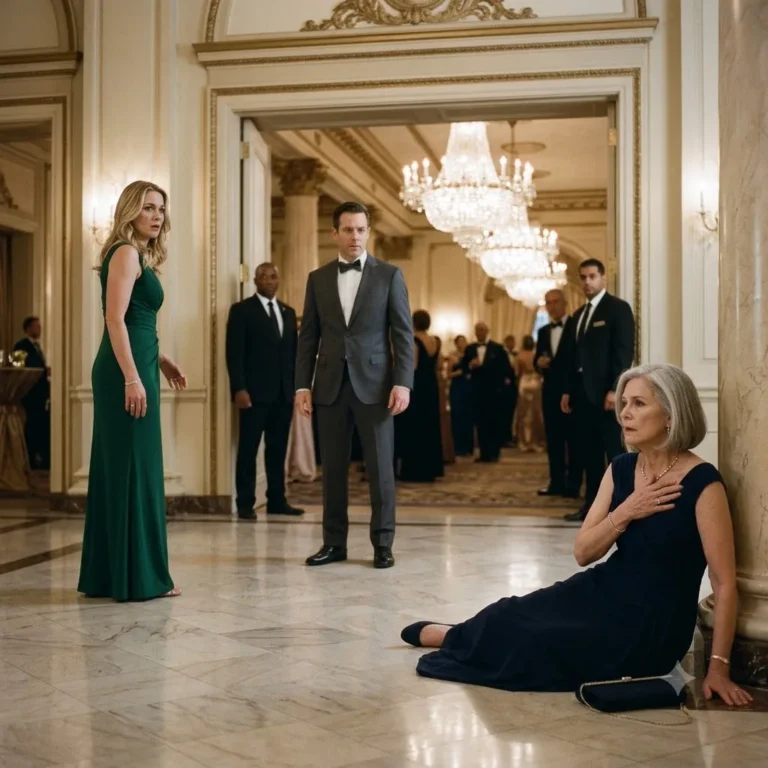
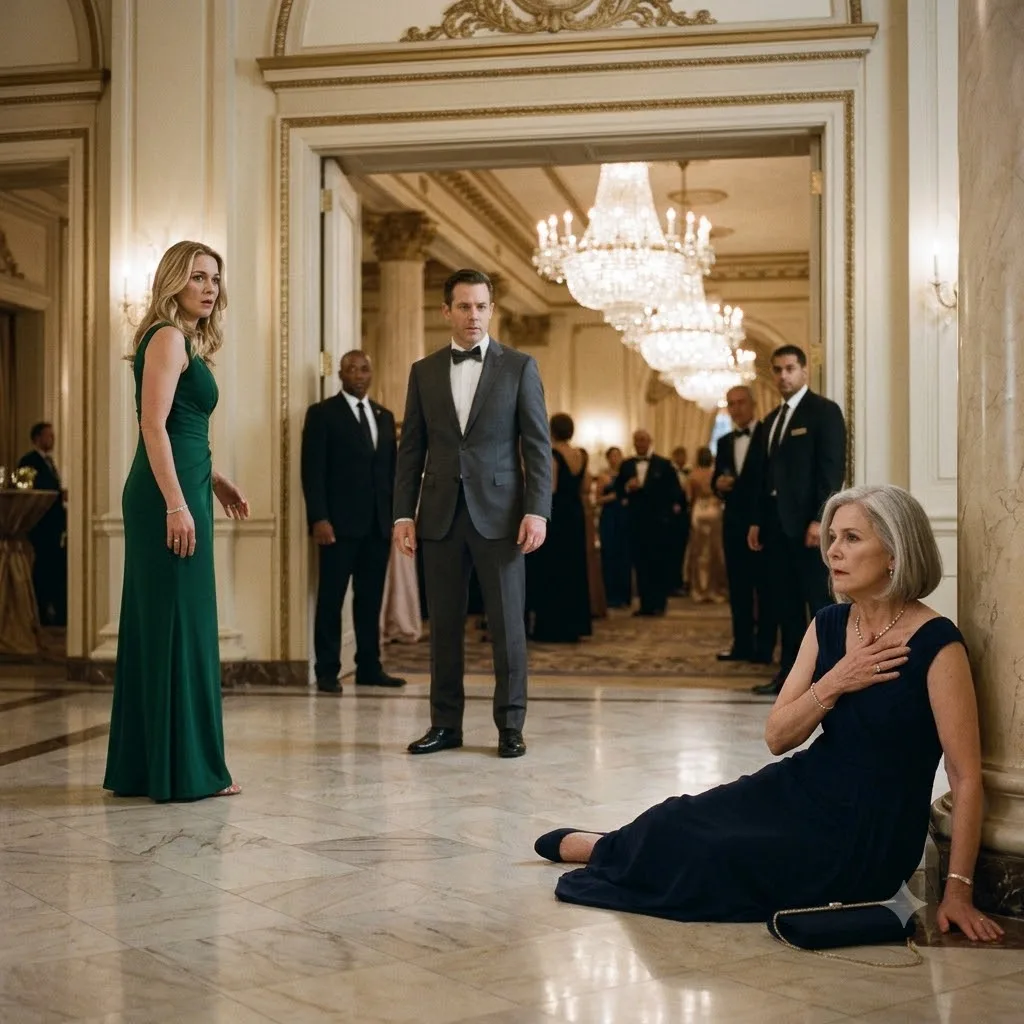
The weeks after the gala taught me that consequences have a strange rhythm.
At first, everything happens at once.
Phones ring.
People demand answers.
Everyone wants to know what you will do.
Then the noise decreases, and the harder part begins.
You have to keep doing what you said you would do after the emergency stops feeling urgent.
That was where I expected myself to fail.
I had always been strongest in a crisis.
When Julian broke his arm at nine, I was calm in the emergency room.
When my husband died years later, I handled the funeral, insurance forms, bank accounts, and thank-you notes before I allowed myself to fall apart.
When money was tight in my thirties, I could turn panic into a budget before breakfast.
But long conflict exhausted me.
It made me want to settle.
Compromise.
Pay something.
Forgive quickly.
Say everyone had learned a lesson and move on.
That instinct returned about a month after the gala.
My wrist was improving.
The family had mostly stopped calling.
Julian and I were speaking carefully once or twice a week.
The hotel matter was not mine to manage.
The case connected to the assault continued through normal channels.
Nothing dramatic happened.
That ordinary quiet was dangerous.
It made the past feel negotiable again.
One Tuesday afternoon, Julian called.
“Are you busy?”
“I’m reading.”
“Can I come by?”
I looked at the clock.
“Why?”
He hesitated.
“Kendra wrote something for you.”
My body tightened.
“I told you I didn’t want to see her.”
“She isn’t coming.”
“What did she write?”
“An apology.”
I said nothing.
Julian continued.
“You don’t have to read it.”
That was the right thing to say.
It made me more willing.
“Bring it.”
He arrived forty minutes later with a sealed envelope.
He placed it on my kitchen table.
I did not touch it.
He sat across from me.
“I haven’t read it.”
“Why not?”
“She said it was for you.”
I studied him.
A month earlier, he would have read it, explained it, and prepared me to receive it kindly.
Now he seemed to understand that he was only carrying paper.
I picked up the envelope.
Kendra had written my name on the front.
Evelyn.
No Mom.
No Mrs. Parker.
Just my name.
I opened it.
The letter was two pages.
The first paragraph made my heart sink.
She wrote about stress.
The event.
Her business.
Her fear.
Her embarrassment.
I almost stopped reading.
Then the tone changed.
She wrote:
I asked you for money and you said no.
I did not respect that answer.
I kept reading.
I used your name on the invitation even though you had not agreed to sponsor or host the event.
My chest tightened.
I told people the event had family backing because I wanted them to believe I had more financial support than I did.
There it was.
Not a misunderstanding.
A choice.
Then:
I planned to thank you publicly for paying because I believed you would not correct me in front of the room.
I stopped.
I looked at Julian.
He stared at the table.
“She finally said it.”
He nodded.
I returned to the letter.
Kendra wrote that when I stood and said no, she felt exposed and humiliated.
She wrote that she blamed me for the humiliation even though she had created the lie.
Then she wrote:
I hit you because I was angry that you would not protect me from the consequences of what I had done.
I read that sentence three times.
My eyes filled.
Not because it healed me.
Because it named the structure exactly.
I would not protect her from the consequences.
That was what everyone had been asking since the moment I fell.
Protect her reputation.
Protect her business.
Protect the marriage.
Protect the family from gossip.
Protect people from discomfort.
No one had needed to ask who would protect me.
I had finally done it myself.
The letter continued.
Kendra did not ask me to withdraw the report.
She did not ask me to pay.
She did not ask me to tell family members to forgive her.
She wrote that she understood if I did not want contact.
At the end she said:
I am sorry for lying about your agreement, for using the room to pressure you, for putting my hand on you, and for trying afterward to make your refusal the cause of my actions.
It was not.
I placed the pages on the table.
Julian waited.
“Well?”
I took a long breath.
“That is an apology.”
He nodded.
“Do you forgive her?”
I looked at him.
“You still want the ending before the middle is finished.”
He almost smiled.
“Probably.”
“I believe the letter is honest.”
“That’s something.”
“It is.”
I folded it.
“But I am not ready to see her.”
He accepted that.
“I’ll tell her.”
“No.”
He looked surprised.
“She wrote to me.
I’ll answer her.”
I took out a sheet of stationery.
Julian stood.
“I can leave.”
“Please.”
He kissed my forehead before he went.
The gesture was gentle.
I let him.
Then I wrote Kendra a short reply.
I received your letter.
Thank you for naming what happened without asking me to change it.
I am not ready for in-person contact.
I do not know when I will be.
Do not ask Julian to negotiate that for us.
I hope you continue taking responsibility for what happened.
Evelyn
I read it once.
Then I mailed it.
No emotional speech.
No promise.
No punishment.
Just a boundary.
That evening, I felt something I had not expected.
Relief.
For weeks, I had carried the burden of proving reality.
The email proved I had said no.
The hotel contract proved I was not responsible.
The witness and video supported what happened in the foyer.
Julian had admitted he knew about the announcement.
Now Kendra herself had named the central choices in writing.
I did not need the letter as evidence.
I needed it emotionally.
It meant I no longer had to wonder whether she understood what she had done.
Understanding and change are not the same.
But understanding is where excuses begin to lose power.
A few days later, Teresa invited me to lunch.
We met at a small café we had visited for years.
She waited until we had ordered before asking about Julian.
“How are you two?”
“Trying.”
“That sounds honest.”
“It is.”
She stirred her coffee.
“What about Kendra?”
“I’m not seeing her.”
Teresa nodded.
“People think you’re being hard.”
I smiled.
“Of course they do.”
“I don’t.”
“Thank you.”
She leaned forward.
“Can I tell you something without making you angry?”
“That depends entirely on what it is.”
She laughed.
Then she grew serious.
“I think some people are uncomfortable because if you’re allowed to say no this firmly, they have to think about all the times they’ve relied on you saying yes.”
That sentence stayed with me.
I thought of family vacations.
Restaurant checks.
Holiday expenses.
Emergency loans that somehow never became loans again.
None of those moments were crimes.
Most were not even malicious.
But generosity can create a role.
Once you become the reliable person, people stop seeing each individual yes as a choice.
It becomes part of your identity.
Evelyn handles it.
Evelyn can afford it.
Evelyn doesn’t mind.
Evelyn doesn’t like conflict.
Evelyn will come around.
I had helped build that role because being needed made me feel useful after retirement.
When my husband died, there was a hole in my life that I filled partly by solving other people’s problems.
I helped Julian with a home repair.
I paid for a family trip.
I covered a medical deductible once.
I bought expensive gifts when people were struggling.
None of those choices were wrong.
But somewhere along the way, I stopped checking whether I was still choosing.
That distinction mattered.
“You’re right,” I told Teresa.
“I usually am.”
“Don’t ruin the moment.”
She laughed.
I smiled too.
Then I said, “I think I need to learn how to be generous without being available for extraction.”
Teresa stopped smiling.
“That’s a good sentence.”
“It took me sixty-nine years.”
“Still counts.”
After lunch, I went home and reviewed my finances.
Not because I was afraid anyone had stolen anything.
Because I wanted to reconnect money with my own future.
I looked at my savings.
My pension.
My monthly expenses.
The account I had set aside for home maintenance.
The money I hoped would cover care if I ever needed it.
The small amount I donated each year.
The travel I had postponed twice.
The numbers reminded me that money is not only what you can spend today.
It is choice stored for later.
Kendra had seen $20,000 as unused capacity.
I saw it as independence.
That difference was not selfishness.
It was ownership.
I decided to take a trip in the spring.
Nothing extravagant.
A place I had wanted to visit for years but kept postponing because someone always seemed to need something.
When I told Julian, he smiled.
“Good.”
“You sound surprised.”
“I’m not.”
“You are.”
He laughed.
“Maybe a little.”
Then he said, “You should spend your money on yourself sometimes.”
I raised an eyebrow.
“Look at you growing.”
He groaned.
“Mom.”
The ordinary teasing felt precious.
Trust had not returned fully.
But we were building small pieces.
He began asking before coming over.
He stopped bringing me updates about Kendra unless they involved me.
When relatives called with gossip, he redirected them.
Most importantly, he stopped trying to make my feelings easier for him.
One afternoon, he said, “I hate that you don’t trust me.”
A month earlier, I would have reassured him.
Instead, I said, “I know.”
He waited.
I did not add anything.
After a moment, he nodded.
“I guess I have to live with that until I change it.”
“Yes.”
He laughed once without humor.
“You’ve become difficult.”
“I was always difficult.”
“No, you weren’t.”
“That may have been the problem.”
He smiled.
I did too.
The case connected to the hotel incident continued in the background.
I do not need to turn every step into drama.
There were calls.
There were documents.
There were people doing their jobs.
I cooperated when asked.
I did not withdraw my account.
I did not exaggerate it.
I did not minimize it.
That was my entire responsibility.
Kendra’s responsibility was hers.
At one point, someone asked whether I wanted to describe the impact of what happened.
I thought carefully.
The physical pain mattered.
The injured wrist mattered.
But what I said was this:
“The hardest part was realizing my son believed my dislike of public conflict could be used against me.”
That was the wound I could not measure on a medical form.
The assault was one second.
The plan required knowledge of who I was.
That knowledge came through Julian.
He had not meant to give Kendra a weapon.
But he had.
He knew I would rather pay than create a scene.
He knew I would worry about humiliating a woman on her birthday.
He knew I would question whether defending myself was worth ruining the evening for everyone else.
He knew I had spent a lifetime believing restraint was virtue.
Kendra built the trap around those facts.
Julian had stood beside it.
That was why rebuilding trust took longer than healing my wrist.
As winter deepened, I became less interested in what people thought of the gala.
The world moved on.
People who had attended found new things to discuss.
Kendra’s business did not disappear from the earth.
Neither did my family.
The catastrophe I had been threatened with—everyone ruined because I refused to stay quiet—did not happen.
Life continued.
That was one of the most important lessons.
People often pressure you with imagined disasters.
If you do not pay, everything will collapse.
If you tell the truth, the family will split forever.
If you enforce a boundary, no one will forgive you.
If you report harm, you will destroy someone.
Reality is usually more complicated.
Some relationships do break.
Some people do get angry.
Some opportunities are lost.
But the world does not end because one person stops carrying what never belonged to them.
In January, I received another letter from Kendra.
This one was shorter.
She wrote that she had received my reply and would respect my request for no in-person contact.
She wrote that she understood I would decide if and when that changed.
Then she added:
I used to think your calmness meant you would always give in.
I understand now that I mistook restraint for weakness.
I sat with that sentence.
Then I put the letter in the folder.
Not because I wanted a permanent archive of pain.
Because it marked a change.
For years, I had mistaken my own restraint for obligation too.
If I could remain calm, I believed I should absorb more.
If I could afford something, I believed refusing might be selfish.
If I could prevent conflict, I believed I should.
But calmness is not consent.
Capacity is not duty.
Peace is not the same as surrender.
I wrote those three sentences on a card and placed it inside my desk.
They became my new rules.
In February, Julian asked if he could take me to dinner for my birthday.
“Just you?”
“Just me.”
“No surprise guests?”
“No.”
“No microphone?”
He winced.
“That joke is going to last forever, isn’t it?”
“Probably.”
He laughed.
We went to a quiet restaurant.
When the check arrived, he reached for it.
I reached too.
He slapped my hand lightly away from the folder.
Then both of us froze.
The gesture was harmless.
Playful.
But the word slap existed between us now.
Julian’s face changed.
“I’m sorry.”
I looked at his hand.
Then at him.
“It’s okay.”
He started to speak.
I shook my head.
“This one is okay.”
He exhaled.
Then he paid.
We sat over coffee afterward.
He told me things about work.
I told him about the trip I was planning.
We did not discuss Kendra until the end.
Then he said, “She’s still working on herself.”
I nodded.
“I hope she is.”
“She knows you may never want a relationship with her again.”
I looked out the window.
“I don’t know what I’ll want.”
“That’s fair.”
“Stop saying everything is fair.”
He smiled.
“Accurate?”
I laughed.
“Better.”
He grew serious.
“I need you to know something.”
“What?”
“If you never forgive her, I’m not going to punish you for that.”
I looked at him.
“And if I do forgive her, I’m not promising everything goes back to normal.”
“I know.”
“Forgiveness is not restored access.”
“I know.”
“Trust is separate.”
“I know.”
I studied his face.
He looked tired but steady.
“Then maybe you’re finally listening.”
“I am.”
That dinner did not repair everything.
Nothing did.
Repair came in pieces.
A phone call where he told the truth even though it made him look bad.
A visit he asked permission for.
A holiday where he did not assume I would pay.
A conversation where he let me be angry without making me comfort him.
Small things.
Almost boring things.
That is what trust is made of after it breaks.
Not speeches.
Repeated evidence.
By early spring, I had stopped checking my phone every time Julian went silent for a day.
I had stopped wondering whether Kendra was telling new versions of the story.
I had stopped imagining the ballroom every night.
The memory remained.
It simply stopped occupying every room inside me.
Then, three days before I left for my trip, I found a package on my porch.
No return address on the front.
Inside was the printed gala invitation.
The original.
The one that said:
Hosted with gratitude by Evelyn Parker.
Across the bottom, in Kendra’s handwriting, were four words.
You never agreed.
Beneath that:
I know that now.
There was no request.
No explanation.
No demand for forgiveness.
I stood in the doorway holding the paper that had once made me feel trapped.
Then I carried it to my desk.
I placed it beside the first hotel email.
The invitation told the lie.
The email told the truth.
Both had existed before the applause.
Only one had been based on my consent.
That difference had changed everything.