
My name is Theresa, and I am 63 years old. On paper, my life sounds ordinary. I am a widow, a mother, and the co-owner of a small restaurant in a quiet town.
Yet the bravest decision I ever made was not continuing after my husband died or raising our daughter through difficult years. It was buying a plane ticket, traveling thousands of miles, and refusing to let 12 silent Christmases become the end of our family’s story.
The Daughter Who Filled Our Home With Life
My daughter, Anna, had always been curious about the world. As a child, she covered her bedroom walls with maps and photographs of cities she hoped to visit.
My husband, Robert, encouraged her dreams. He would sit beside her at the kitchen table while she described the places she planned to see.
I loved her ambition, but it also frightened me.
After Anna graduated from college, she accepted a position with an international design company. Her work took her to Seoul, where she planned to remain for one year.
That year changed everything.
Anna became comfortable in the city, formed new friendships, and built a successful career. During her second year abroad, she met Daniel, a kind and thoughtful man who worked as an architect.
When Anna called to tell us they were engaged, Robert was delighted. I tried to sound happy, but my fear took control.
I imagined my daughter building a permanent life on the other side of the world. I worried about language, distance, and the traditions I did not understand.
Instead of admitting that I was afraid of losing her, I criticized her decision.
Words I Could Not Take Back
Our argument began during a video call.
Anna expected me to celebrate with her. Instead, I asked why she needed to marry so quickly and whether she truly understood what she was giving up.
She insisted she was not giving up anything. She had a fulfilling career, a loving partner, and a life that made her happy.
I told her happiness could change.
She accused me of refusing to respect her choices. I responded with words that sounded harsh the moment they left my mouth.
“If you choose that life, don’t expect everything here to remain waiting for you.”
The screen went silent.
Anna looked hurt rather than angry. She ended the call a few moments later.
Robert told me I had made a terrible mistake. He said our daughter was not abandoning us—she was simply creating a family of her own.
I knew he was right, but pride prevented me from apologizing.
The Years of Silence
Anna married Daniel in Seoul. Robert attended the wedding alone because I claimed the restaurant could not manage without me.
That excuse was not true.
I stayed home because admitting I was wrong felt more difficult than missing my daughter’s wedding. It became one of the greatest regrets of my life.
At first, Anna called her father regularly. She asked about me, but I remained in another room and pretended to be busy.
Gradually, the calls became less frequent.
Birthday cards arrived, followed by photographs of the life she was building. I kept every one of them, although I never wrote back.
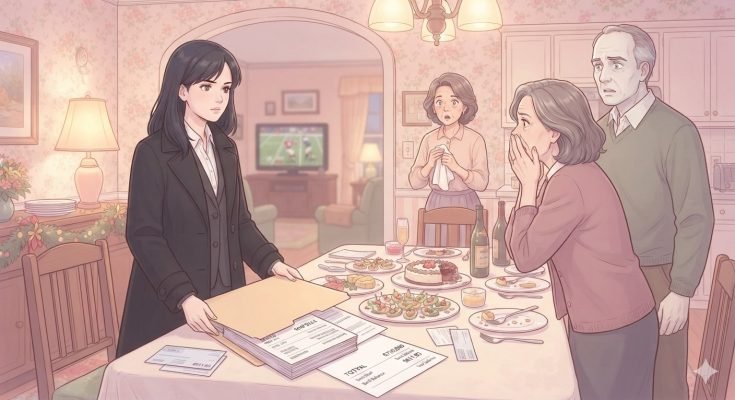
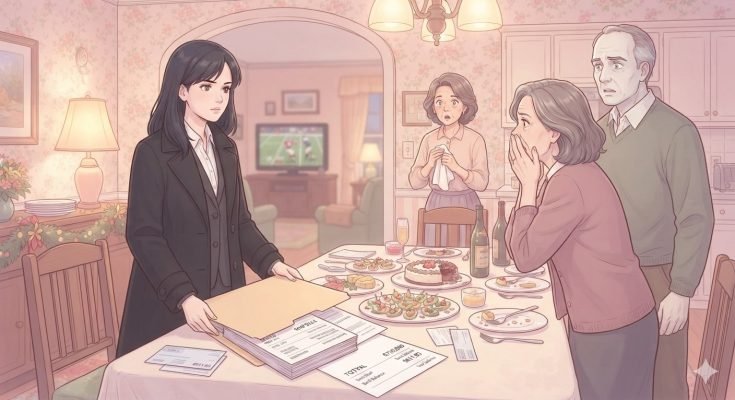
Every Christmas, I set an additional chair at the dinner table. Robert never questioned it. He understood that part of me was still waiting for Anna to come home.
But years passed, and the chair remained empty.
A Loss That Changed Everything
Robert died unexpectedly after suffering a heart attack.
The loss left me unable to recognize my own life. The restaurant felt empty without his voice, and our home became unbearably quiet.
Anna returned for the funeral.
When I saw her walking toward me, I wanted to hold her. Instead, we exchanged a careful greeting between two people who had allowed too much time to pass.
She stayed for four days. We discussed funeral arrangements and paperwork but avoided speaking about our broken relationship.
Before leaving, Anna placed her hand on mine.
“You can call me anytime,” she said.
I promised I would.
I did not keep that promise.
Twelve Empty Christmases
After Robert’s death, I buried myself in work. I opened the restaurant before sunrise and stayed until the last employee went home.
Customers assumed I was dedicated. The truth was that I did not want to return to an empty house.
Each Christmas became more difficult. I continued placing Anna’s chair at the table even though there was no reason to believe she would arrive.
On the 12th Christmas after her wedding, I found an old letter inside Robert’s desk.
He had written it shortly before his death but never sent it.
“Theresa,” it began, “pride has already taken years from you. Do not let it take the rest of your life.”
I read the letter repeatedly.
The following morning, I searched for flights to Seoul.
The Journey I Had Avoided
I had not traveled internationally in years. The airport overwhelmed me, and the long flight gave me too much time to reconsider my decision.
I had not told Anna I was coming. I worried that she might refuse to see me—or that she had finally built a life in which there was no place for me.
When I arrived, I took a taxi to the address printed on one of her old Christmas cards.
Daniel opened the door.
For several seconds, neither of us spoke. Then he smiled gently and called Anna’s name.
She appeared at the end of the hallway and stopped.
I had prepared an entire speech during the flight, but all the carefully chosen words disappeared.
“I’m sorry,” I said. “I should have come years ago.”
Anna crossed the room and wrapped her arms around me.
We both began to cry.
The Truth We Finally Shared
During the following days, we talked more honestly than we had in years.
Anna admitted that my absence from her wedding had devastated her. She had interpreted my silence as proof that I did not accept her marriage or the person she had become.
I told her that my reaction had never truly been about Daniel or Seoul. I had been afraid that her independence meant I was no longer needed.
Instead of expressing that fear, I had tried to control her.
Daniel listened without interrupting. He told me that Anna had never stopped hoping we would reconcile. She had kept photographs of our family throughout their home and prepared traditional dishes from her childhood every Christmas.
The empty chair had existed on both sides of the world.
A New Beginning
I remained in Seoul for three weeks.
Daniel showed me the city, and Anna introduced me to friends who had become her extended family. I began to understand that the life I had feared was not a rejection of her past. It was an expansion of it.
Anna also admitted that she had become unhappy at work. She dreamed of doing something more personal and had often imagined opening a restaurant inspired by the food she grew up eating.
That conversation created an unexpected idea.
The restaurant Robert and I had operated for years was struggling. I had considered selling it because managing everything alone had become exhausting.
“What if we ran it together?” I asked.
Anna looked at Daniel, and he smiled.
Months later, they moved to my town.
The decision surprised everyone. Friends who believed Anna would never return suddenly saw her working beside me in the restaurant where she had spent much of her childhood.
Daniel continued his architectural work remotely and helped redesign the dining room. He combined familiar features from the old restaurant with clean, modern details inspired by their home in Seoul.
We named the restaurant Second Life.
More Than a Restaurant
Our menu reflected both parts of Anna’s story. We preserved several of Robert’s favorite recipes while adding dishes influenced by the years she and Daniel spent abroad.
At first, I worried our customers would resist the changes. Instead, they became curious.
The restaurant gradually filled with families, travelers, students, and longtime regulars. Some came for familiar comfort food, while others wanted to try something new.
Every table represented the lesson Anna and I had learned: different traditions do not have to compete. They can share the same room and create something neither could produce alone.
Working together did not instantly repair everything. We occasionally disagreed, and old wounds resurfaced when conversations became difficult.
This time, however, we did not retreat into silence.
We spoke honestly, apologized when necessary, and returned to the kitchen.
The Chair Is Finally Filled
The chair I kept empty for 12 Christmases now stands at a table near the restaurant window.
Anna sits there after closing while we share tea and review the following day’s preparations. Daniel often joins us, and the room fills with conversation and laughter.
I once believed that strength meant refusing to admit I was wrong. I now understand that real courage can mean crossing an ocean to offer an apology without knowing whether it will be accepted.
My daughter’s marriage did not take her away from me. My fear, pride, and silence created that distance.
Buying the plane ticket did not recover the years we lost, but it prevented us from losing the years that remained.
Second Life is more than the name of our restaurant. It describes what happened to our family when two people stopped waiting for the other to make the first move.
Sometimes reconciliation begins with a long conversation. Sometimes it starts with a letter discovered in an old desk.
For us, it began with a plane ticket—and the decision that 12 empty Christmases were already enough.