PART 3
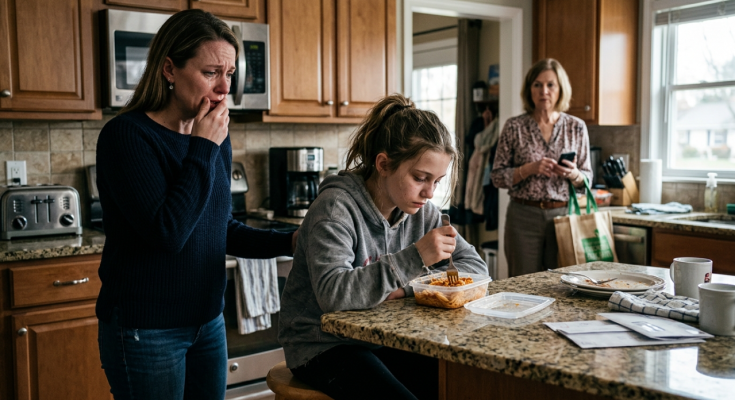
She smiled—small, relieved.
“I got pizza on Monday.”
I smiled back, but my chest tightened. An eleven-year-old shouldn’t sound grateful for something as basic as lunch.
That evening I made spaghetti, garlic bread, and chocolate pudding from scratch. Sophie ate two bowls.
Halfway through dinner she looked up.
“Grandma called me.”
I stopped chewing.
“What did she say?”
“She asked if I knew why her grocery card was broken.”
Not How are you?
Not I heard you had a hard week.
Just the card.
“What did you tell her?”
“I said you were making dinner.”
I reached across the table and squeezed her hand.
“You never have to answer questions that make you uncomfortable, okay?”
She nodded.
“I know.”
Monday Morning
At 8:17 a.m., my office phone rang.
“Bennett Architecture.”
“This is Margaret Bennett.”
Of course it was.
I closed my office door.
“Hi, Mom.”
“There you are,” she snapped. “I’ve been trying to reach you for twenty-four hours.”
“I noticed.”
“My grocery card isn’t working.”
“I know.”
Silence.
“You know?”
“Yes.”
“So fix it.”
I leaned back in my chair.
“I canceled it.”
Another silence—this one much longer.
“You… what?”
“I canceled the grocery allowance.”
Her voice climbed an octave.
“You can’t be serious.”
“I am.”
“Over a misunderstanding?”
I closed my eyes.
“A misunderstanding is ordering the wrong cereal. Sophie went hungry for five days.”
“Oh, for heaven’s sake,” Mom sighed dramatically. “Children skip meals all the time.”
Something inside me hardened.
“No. They shouldn’t.”
“You’re being emotional.”
“And you’re being dismissive.”
She laughed—a short, irritated laugh.
“So this is revenge?”
“No.”
“Then what is it?”
“Consequences.”
She hung up.
The House I Was Paying For
Most people assumed Mom owned her beautiful colonial home.
She let them believe it.
The truth was buried in paperwork.
After Dad died, the mortgage had nearly swallowed her. She was two months from foreclosure when I refinanced the property—in my name.
Legally, I owned the house.
Emotionally, it had always been hers.
Or so I thought.
That afternoon I logged into the property management portal.
Every automatic payment appeared neatly scheduled.
Mortgage: Paid by me.
Property tax escrow: Paid by me.
Home insurance: Paid by me.
Water.
Electricity.
Gas.
Internet.
Every month I spent just under $5,900 before Mom bought a single grocery item.
I had never added it up before.
Six years.
Nearly $425,000.
I wasn’t wealthy because I enjoyed spending money.
I was comfortable because I worked sixty-hour weeks building my architecture firm from two employees into thirty-four.
Every dollar had been earned.
And every dollar I gave my mother had been given freely.
Until generosity became expectation.
An Unexpected Visitor
Tuesday evening, someone knocked on my door.
When I opened it, my younger brother stood there.
Ethan Bennett looked exhausted.
“Can I come in?”
I stepped aside.
He sat at my kitchen table while Sophie finished homework upstairs.
“She’s furious,” he said.
“I assumed.”
“She told everyone you abandoned her.”
I almost laughed.
“Really?”
“She said you cut off her food.”
I poured coffee for both of us.
“Did she mention why?”
He looked down.
“No.”
“That figures.”
Ethan rubbed his forehead.
“I’m not here to defend her.”
“You’re not?”
“No.”
He sighed.
“I actually came to apologize.”
That surprised me.
“For what?”
“For letting you become the parent.”
His words hung between us.
Ethan was forty-two.
A high school history teacher.
Kind-hearted.
Terrible with confrontation.
“When Dad got sick,” he continued quietly, “you handled everything.”
Hospital bills.
Insurance.
The funeral.
Mom’s finances.
The house.
“I kept telling myself you had it under control.”
“I did.”
“I know.”
He looked at me with genuine regret.
“But I never asked what it was costing you.”
For the first time all week, I felt understood.
“You know what hurt the most?” I asked.
“What?”
“She wasn’t worried about Sophie.”
Ethan nodded immediately.
“I know.”
“She was worried about salmon.”
He didn’t even try to argue.
Wednesday Dinner
Mom invited the entire family to dinner.
Correction.
She invited everyone except me.
I only found out because Ethan accidentally mentioned it.
“She didn’t invite us?”
He hesitated.
“She said… you needed time to reflect.”
Reflect.
As though I were a rebellious teenager.
Not the woman financing half her life.
I let it go.
Until 7:42 p.m.
My phone rang again.
This time it was Ethan.
“You should probably come.”
“What happened?”
“She’s telling people you’ve become unstable.”
I grabbed my keys.
Sophie stayed with my neighbor.
Fifteen minutes later I walked into the house I legally owned.
The dining room fell silent.
My aunt Linda stopped pouring wine.
Uncle Robert lowered his fork.
Mom looked annoyed.
“Well,” she said, “look who decided to join us.”
I remained standing.
“I heard I was unstable.”
Mom smiled tightly.
“We’re having a private family dinner.”
“I am family.”
She folded her napkin.
“You’ve certainly forgotten how to act like it.”
I looked around the table.
Then I asked one question.
“Did anyone here know Sophie went hungry all week?”
Confused faces.
Aunt Linda frowned.
“What?”
Mom interrupted immediately.
“Oh, don’t start exaggerating—”
“No,” I said calmly.
“Answer the question.”
Nobody answered because nobody knew.
I turned back to Mom.
“You told everyone I canceled your groceries.”
“Yes.”
“Did you tell them why?”
She crossed her arms.
“It wasn’t relevant.”
I looked at my relatives.
“My daughter’s lunch account failed. She ate nothing at school for five days.”
Aunt Linda gasped.
Uncle Robert slowly put down his fork.
I continued.
“I called Mom because I was devastated.”
Everyone looked toward Margaret.
“She told me Sophie could take crackers.”
The room became painfully quiet.
Mom’s face flushed.
“That’s not what I meant.”
“It’s exactly what you said.”
“You’re twisting my words.”
I reached into my purse.
Pulled out my phone.
And pressed play.
Because after years of managing difficult client meetings, I had developed one habit:
I recorded important financial conversations.
Her voice filled the dining room.
“She can take crackers.”
Then:
“Children survive.”
Then:
“You’re making this dramatic.”
I stopped the recording.
Nobody spoke.
Aunt Linda looked horrified.
Ethan stared at the table.
Mom whispered, “You recorded me?”
“I did.”
“That’s an invasion of privacy!”
“No,” I replied.
“It’s accountability.”
She stood so abruptly her chair nearly tipped over.
“Get out of my house!”
I looked at her for several long seconds.
Then I answered quietly.
“I think you mean my house.”
Her expression changed instantly.
Not anger.
Fear.
Because for the first time, she remembered whose name was actually on the deed.
Thursday
At exactly 9:03 a.m., my lawyer called.
“Claire, I reviewed the property documents.”
I closed my office door again.
“As expected,” he said, “you’re the sole owner.”
“I know.”
“If you intend to continue supporting your mother, we should create a formal occupancy agreement.”
“And if I don’t?”
“You have options.”
I stared out the window toward downtown Columbus.
People hurried along sidewalks carrying coffee, briefcases, and backpacks.
Normal lives.
Normal families.
“David,” I asked quietly, “have you ever seen someone mistake kindness for obligation?”
He chuckled sadly.
“Every week.”
That afternoon, I drove to Sophie’s school with a brown paper bag.
Not because she needed lunch anymore.
Just because I wanted to surprise her.
When she saw me through the cafeteria window, her entire face lit up.
She ran over.
“You came!”
“I brought dessert.”
I handed her a homemade brownie.
Her friends cheered.
One little girl smiled and said, “Sophie’s mom makes the best brownies.”
Watching Sophie laugh with chocolate on her face, I realized something important.
I had spent years protecting the past.
Maybe it was finally time to protect the future instead.
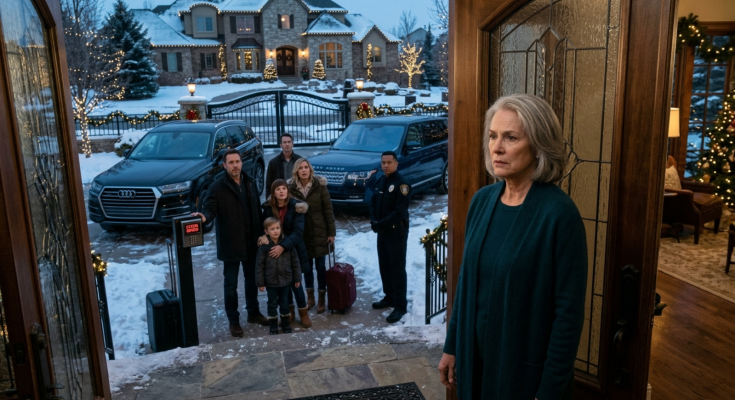
And by the time my mother received the certified envelope arriving at her front door the next morning, she would discover that the canceled grocery card had never been the real beginning.
It had only been the smallest change.