
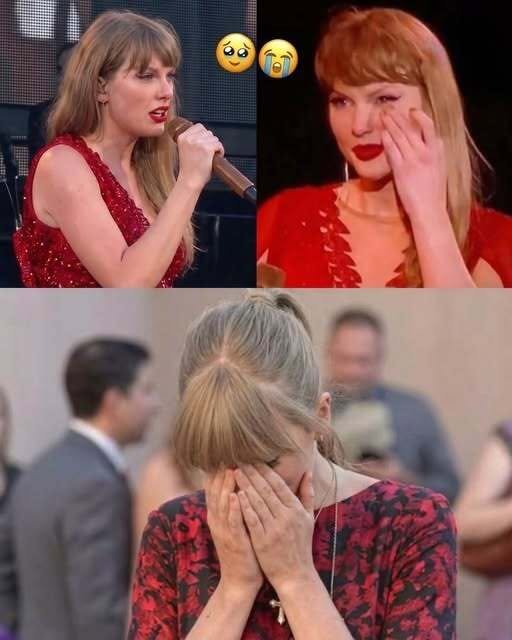
Taylor Swift Health Rumor Highlights the Importance of Checking Celebrity News
Celebrity health stories can spread across the internet with extraordinary speed. A short post, vague statement, or dramatic headline can quickly reach millions of people before anyone has had an opportunity to determine whether the information is accurate.
Recent online discussion involving Taylor Swift illustrates how easily concern can turn into certainty when information is incomplete.
Rather than focusing on an unverified health claim, the situation offers a broader lesson about social media, celebrity privacy, and the importance of checking information before sharing it.
When a Rumor Starts With Very Little Information
Online rumors often begin with something remarkably simple.
A social media post may contain a few emotional sentences suggesting that something has happened to a well-known person. If the message appears to come from someone familiar with the celebrity, readers may immediately assume that it is trustworthy.
But an important question remains: who actually confirmed the information?
Without a direct statement from the individual, their representatives, or a reliable news organization, an online claim may remain exactly that—a claim.
Why Celebrity Health Stories Spread So Quickly
Health-related stories naturally attract attention because people care about the well-being of others.
When the person involved is a globally recognized celebrity such as Swift, that interest can become enormous.
Millions of fans have followed her career for years. They listen to her music, attend concerts, discuss her work, and feel connected to different chapters of her public life.
That emotional connection can make people react quickly when they encounter worrying information.
Concern itself is understandable. The problem begins when concern is treated as proof.
The Difference Between Concern and Confirmation
There is a major difference between saying, “I hope this isn’t true,” and saying, “This has been confirmed.”
The first expresses emotion. The second makes a factual claim.
On social media, those two ideas can become blurred very quickly.
Someone may share an unverified post because they are worried. Another person may repost it with a stronger headline. Someone else may edit the wording and remove the original uncertainty.
After several rounds of sharing, readers may no longer realize that the story began with information that had never been independently verified.
How Repetition Can Create the Illusion of Truth
One of the biggest challenges with viral information is repetition.
When people see the same claim appearing on multiple pages, they may assume that several independent sources have confirmed it.
In reality, dozens of posts may all trace back to the same original rumor.
This is particularly common with celebrity stories. A single social media message can be copied by entertainment pages, short-video accounts, and other websites until the claim appears much more established than it actually is.
The number of posts does not necessarily tell us the reliability of the original information.
Taylor Swift’s Enormous Public Profile
Swift’s level of fame makes her especially vulnerable to this kind of online speculation.
Her career has generated intense interest in nearly every aspect of her public life, from music releases and performances to relationships, fashion, and personal milestones.
That attention can sometimes make it difficult to separate legitimate public information from material created simply to attract clicks.
A headline involving Swift can generate substantial engagement even before readers have checked whether the underlying claim is supported.
Celebrity Privacy Still Matters
There is also an important human issue behind these stories.
Being famous does not mean that every part of a person’s life becomes public property.
Health information can be particularly personal. Unless someone chooses to share details publicly, audiences should be cautious about treating rumors as something they are entitled to investigate or spread.
Fans can care about a celebrity without demanding access to private information.
In fact, respecting boundaries can be one of the most meaningful ways to show support.
The Role of Responsible Fans
Interestingly, viral rumors can sometimes produce a positive response from the same communities that initially spread them.
Fans may begin reminding one another to check sources, avoid reposting unsupported claims, and wait for reliable information.
That behavior can slow the spread of misinformation.
Instead of asking, “How quickly can I share this?” a more useful question is, “How confident am I that this is actually true?”
A few seconds of caution can prevent thousands of additional people from receiving inaccurate information.
A Simple Checklist for Celebrity News
When encountering a dramatic celebrity health story, readers can take several basic steps.
Look for the original source.
Find out where the claim actually began.
Check for direct confirmation.
Has the celebrity, representative, or another credible source addressed the claim?
Look at reputable reporting.
Established news organizations generally have standards for verifying significant claims.
Be cautious with emotional headlines.
Words designed to create fear or urgency can encourage people to share before thinking.
Do not confuse repetition with evidence.
Ten accounts repeating the same unverified claim do not automatically make it true.
Compassion Without Speculation
The strongest response to an uncertain celebrity health story may be surprisingly simple: show concern without pretending to know more than you do.
Fans can send positive messages, continue supporting an artist’s work, and hope that everything is well without spreading private or unconfirmed information.
That approach protects both the person being discussed and the people consuming the information.
What the Internet Can Learn From Moments Like This
The larger lesson is not really about one celebrity.
It is about how modern information works.
The internet gives everyone the ability to publish immediately, but publishing quickly does not make information accurate.
A dramatic claim can travel around the world before reliable sources have even had time to investigate it.
That makes individual judgment increasingly important.
Before clicking share, readers have an opportunity to interrupt the cycle.
Caring Without Demanding Answers
Taylor Swift’s enormous fanbase demonstrates how strongly people can connect with a public figure.
That connection can be positive, inspiring, and meaningful. But genuine support does not require knowing every detail of someone’s private life.
Sometimes caring means accepting uncertainty.
If information has not been confirmed, it is perfectly reasonable to say that it remains unverified.
That small distinction can make online conversations more accurate and more respectful.
A More Responsible Way to Follow Celebrity News
Celebrity news will always attract attention, particularly when it involves someone as internationally recognized as Taylor Swift.
But the most reliable approach is not to believe the most dramatic version of a story. It is to look for evidence, consider the source, and allow confirmed information to speak for itself.
The real lesson behind viral health rumors is therefore broader than any individual headline.
We can care deeply about public figures while still respecting their privacy and refusing to turn uncertainty into fact.
In an online world where information can travel instantly, that kind of restraint is not indifference.
It is responsibility.