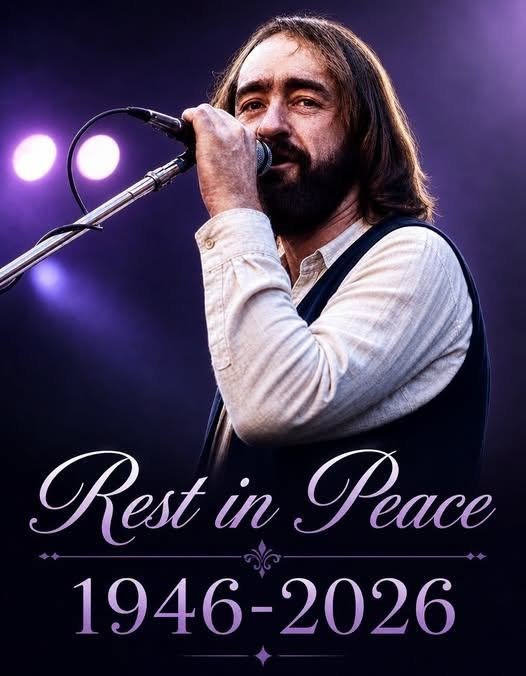
The music world has lost a distinctive and accomplished musician. Dave Mason, who passed away at 79, leaves behind a career that reached across generations and included influential bands, solo recordings, songwriting, collaborations, and decades of memorable performances.
For many listeners, Mason’s importance cannot be measured only by record sales or awards. His greatest contribution was the character he brought to the music itself. His work demonstrated how a musician could make a lasting impression without always needing to be the loudest voice in the room.
Growing Up During a Musical Revolution
Mason developed his musical identity during the 1960s, a period when British rock was changing rapidly.
Blues, folk, psychedelic music, and emerging forms of rock were coming together in new ways. Young musicians were experimenting with sounds and arrangements that challenged traditional ideas about popular music.
It was within this creative environment that Mason began establishing himself as a guitarist and songwriter.
His involvement with Traffic became an important part of that journey.
His Work With Traffic
Traffic was known for combining several musical influences, including rock, blues, folk, jazz, and psychedelic sounds.
The result was music that was difficult to place into a single category, which was part of its appeal.
Mason’s guitar work fit naturally into that environment. Rather than relying solely on flashy playing, he understood how to contribute to the overall mood and structure of a song.
His ability to support an arrangement while still adding his own character became one of the qualities that distinguished his musicianship.
A Career Built on Collaboration
Mason’s musical journey eventually extended well beyond Traffic.
Over the years, he worked with numerous musicians and artists, contributing his talents to a wide variety of projects.
Collaboration was an important part of his career. He demonstrated that great musicianship isn’t always about standing at center stage. Sometimes the most valuable contribution is knowing exactly when to add something—and when to let the music breathe.
That approach helped Mason become a respected guitarist, songwriter, and collaborator.
Finding His Own Voice
Mason also established a successful career as a solo artist.
Away from the identity of a band, he had the opportunity to explore his own musical ideas and develop a more personal sound.
His solo work blended his rock background with melodic songwriting and an approachable emotional quality.
Many of his recordings had an intimate character. Rather than demanding attention through sheer volume or spectacle, they encouraged listeners to return to them over time.
That quality helped his music become part of people’s personal memories.
Music That Became Part of People’s Lives
One measure of a musician’s impact is the way listeners associate their songs with important moments.
A particular recording can become connected to a road trip, a relationship, a quiet evening, or a memory from years earlier.
Mason created music that could occupy that kind of personal space.
For longtime listeners, his songs weren’t simply recordings stored on an album. They became part of the soundtrack to different stages of their lives.
That kind of connection is difficult to create and can last far longer than a chart position.
More Than a Guitarist
Although Mason was widely recognized for his guitar playing, his career reflected a broader range of abilities.
He was also a songwriter, performer, and collaborator who understood how different parts of a musical arrangement could work together.
His career demonstrated that musicianship isn’t limited to technical ability.
Taste, timing, creativity, and the ability to understand a song are equally important.
Those qualities helped Mason remain relevant across changing musical eras.
An Artist Who Spanned Generations
Mason’s career covered an extraordinary period of musical change.
He began during the era of vinyl records and British rock experimentation and continued through decades in which the music industry transformed through cassette tapes, CDs, digital downloads, and streaming.
Throughout those changes, the fundamentals of his work remained recognizable.
Good songwriting, thoughtful playing, and genuine musical expression never went out of style.
Remembering the Music
When a musician with such a long career passes away, it’s natural for fans to revisit their favorite recordings.
Old albums may be played again.
Performances may be rediscovered.
Stories about collaborations and earlier years may resurface.
For younger listeners, this can also be an opportunity to discover an artist they may not have encountered before.
That is one of the enduring benefits of music: great work can continue finding new audiences long after it was first released.
A Lasting Legacy
Dave Mason’s legacy is not limited to a single band, album, or period of his career.
It can be found in his contributions to Traffic, his solo work, his collaborations, his songwriting, and the influence he had as a guitarist and musician.
His career reflected a willingness to explore different musical directions without losing his own identity.
For those who followed his work, that versatility was part of what made him special.
Final Thoughts
Dave Mason’s passing marks the end of a remarkable musical journey, but his recordings remain.
The songs, guitar performances, collaborations, and memories created throughout his career will continue to introduce his work to listeners in the years ahead.
Music has a unique way of preserving the presence of an artist.
A familiar guitar line can bring back a memory.
A favorite song can transport someone to another time.
And an old recording can make a musician feel surprisingly close, even decades after it was first created.
That is perhaps one of the most meaningful legacies an artist can leave behind.
Dave Mason spent decades contributing to rock and popular music, working with talented musicians, developing his own sound, and creating recordings that mattered to listeners.
His career may now be complete, but the music he helped create will continue to speak for itself.